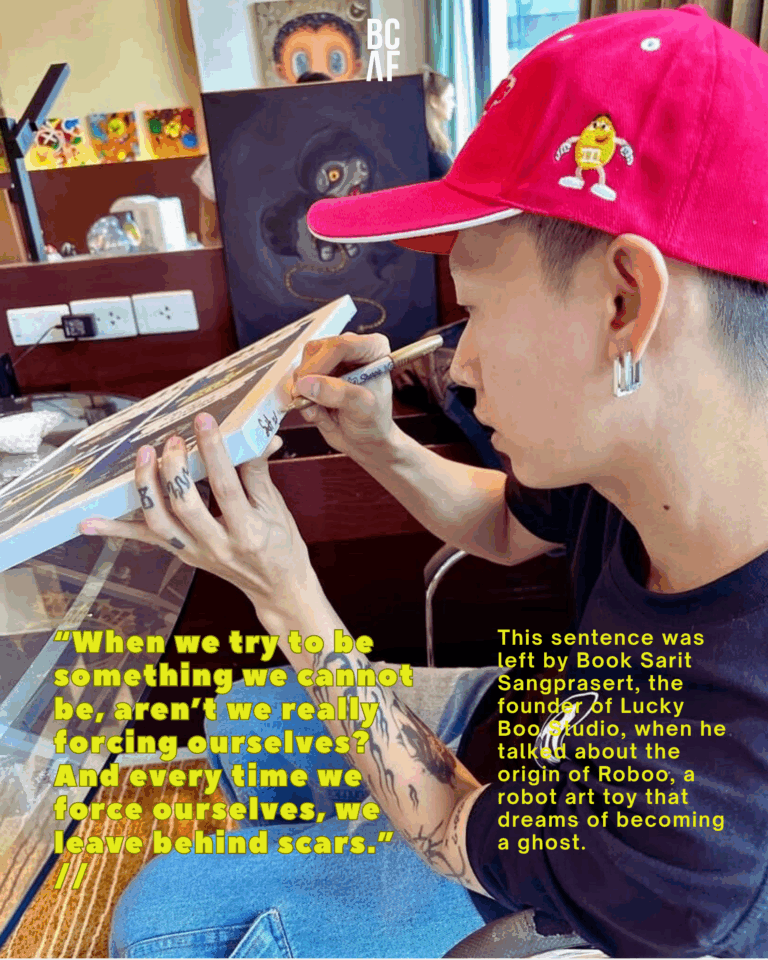
“When we try to be something we cannot be, aren’t we really forcing ourselves? And every time we force ourselves, we leave behind scars.”
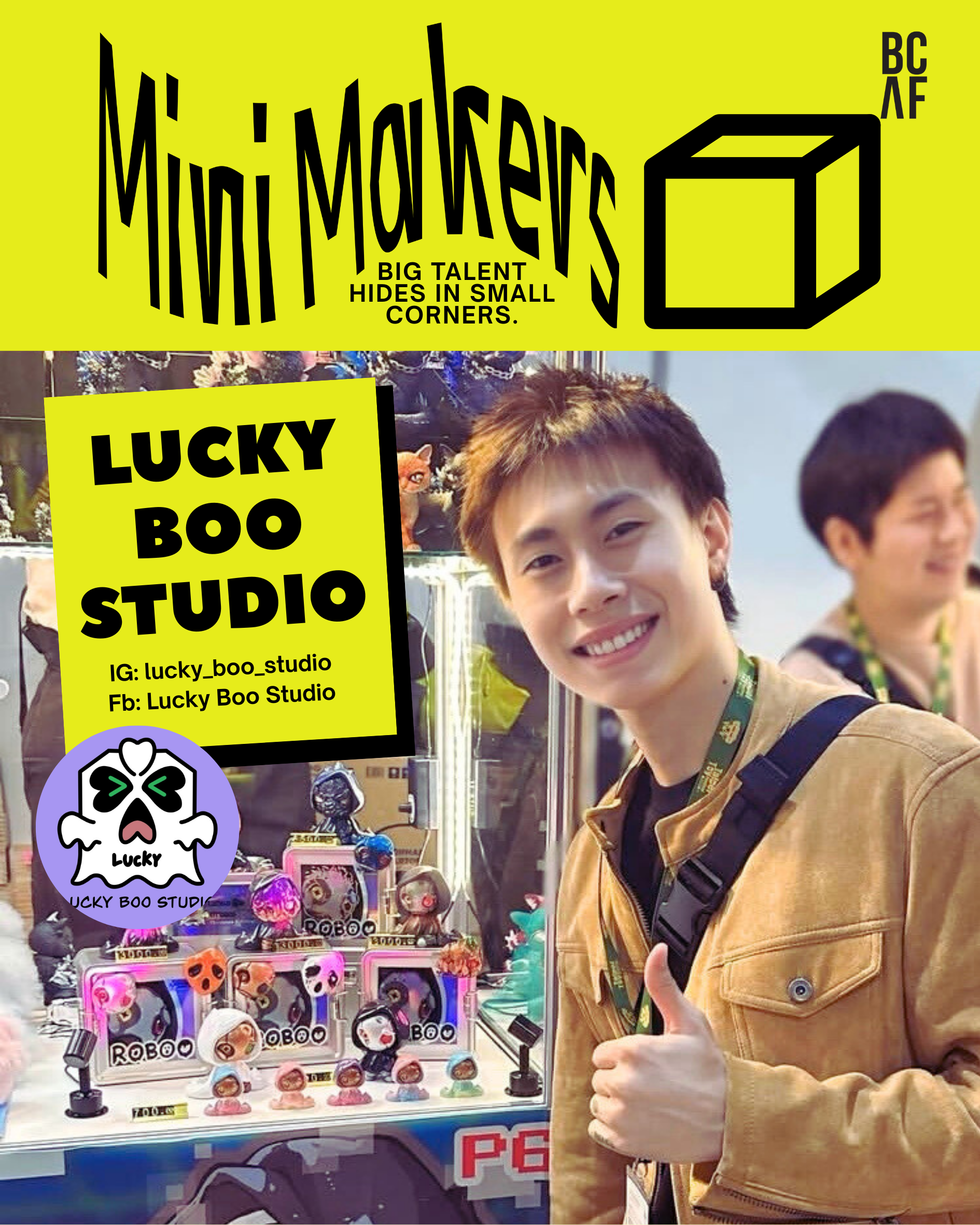
This sentence was left by Book Sarit Sangprasert, the founder of Lucky Boo Studio, when he talked about the origin of Roboo, a robot art toy that dreams of becoming a ghost—a robot seeking immortality yet longing for death. The more we hear Book’s explanation, the more we realize that Roboo isn’t just a character—it reflects Book’s own identity more than we might think.
Childhood: A space for trial and error
Book grew up in a Thai-Chinese family as an only child and was used to playing with toys alone since childhood. As he grew older, instead of just buying toys, he started using household items to make his own toys. Wires were bent, twisted, and assembled into shapes, alongside a long-standing interest in drawing. His family gave him the space to experiment freely.
An only child in a Thai-Chinese family = spoiled?
“Maybe spoiled, maybe not,” Book said. This contradiction shaped one of his key life perspectives: he believes humans are creatures full of contradictions.
Lucky Boo Studio – born out of half contradiction and half a nearly forgotten dream
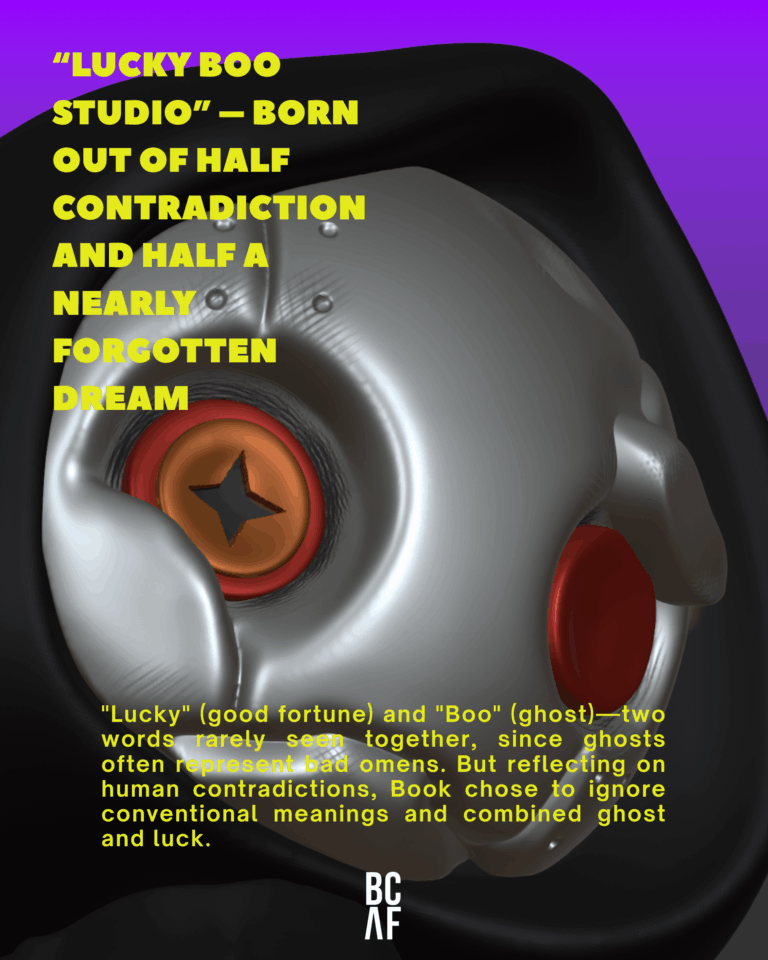
“Lucky” (good fortune) and “Boo” (ghost)—two words rarely seen together, since ghosts often represent bad omens. But reflecting on human contradictions, Book chose to ignore conventional meanings and combined ghost and luck. That’s how the name Lucky Boo Studio came to be.
The birth of Roboo
Before creating Roboo, Book had spent three years in the toy designer industry, designing toys and clothing for brands—a role he calls “working behind the scenes.” Everything changed when he visited an art toy exhibition abroad. While waiting for his flight back to Thailand, he picked up his iPad and pen again:
“I started working while waiting for the plane. I reopened Roboo sketches I’d left unfinished for three years and redesigned them to be more accessible and easier to produce,” he said.
Seeing international artists’ work clarified for him that his previous work wasn’t truly himself—it was constrained. He had lost his identity as an artist. From that moment, he began seriously planning his own art toy brand, posting promotions, participating in events, and using past experience to enjoy the art toy world more freely and authentically.
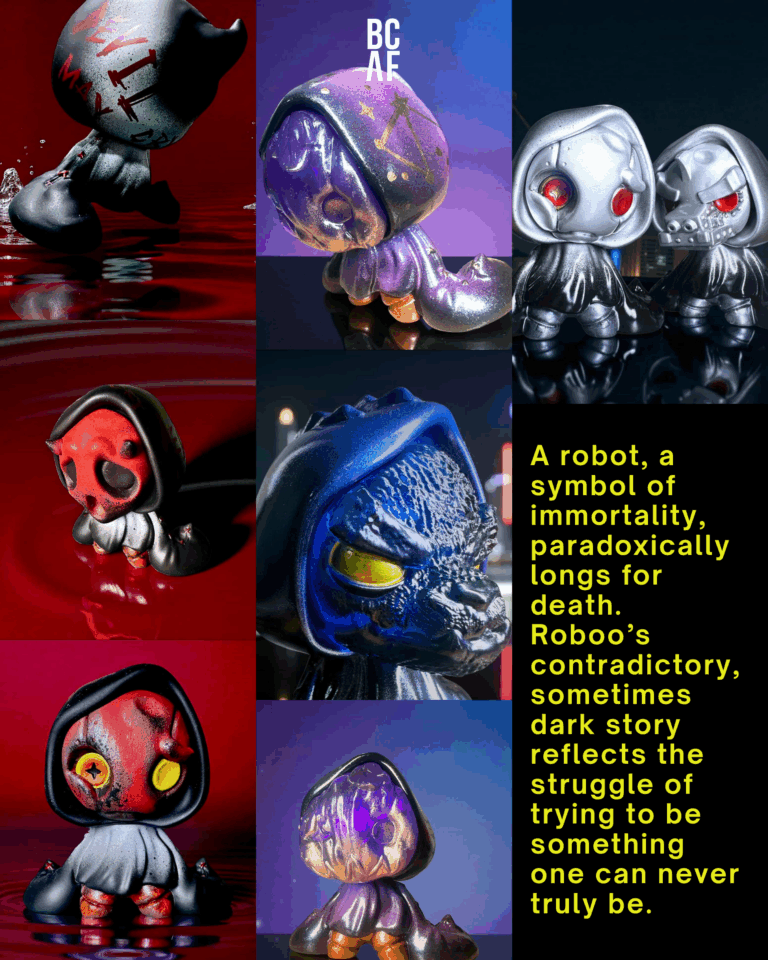
Roboo: The robot who wants to become a ghost to reunite with loved ones
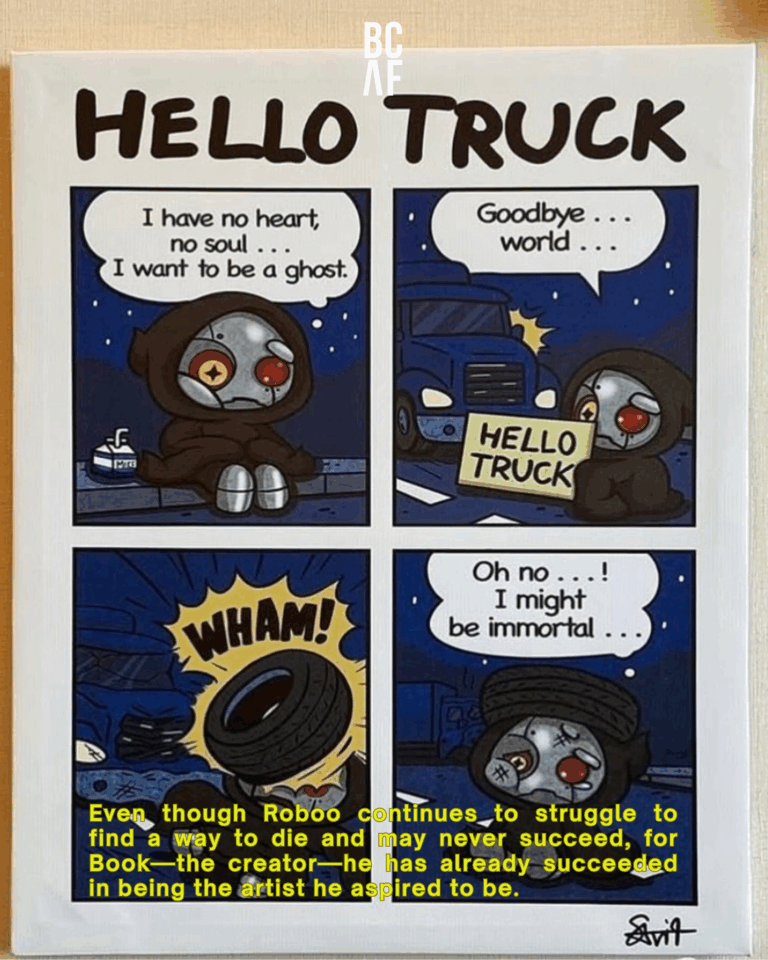
Roboo, Lucky Boo Studio’s first art toy, is a robot full of scars. Book explained that these scars symbolize the robot’s attempts at self-harm in every way possible—to die and become a ghost, returning to those who created him.
A robot, a symbol of immortality, paradoxically longs for death. Roboo’s contradictory, sometimes dark story reflects the struggle of trying to be something one can never truly be—a phase Book admits he has experienced, and one many others likely have as well.
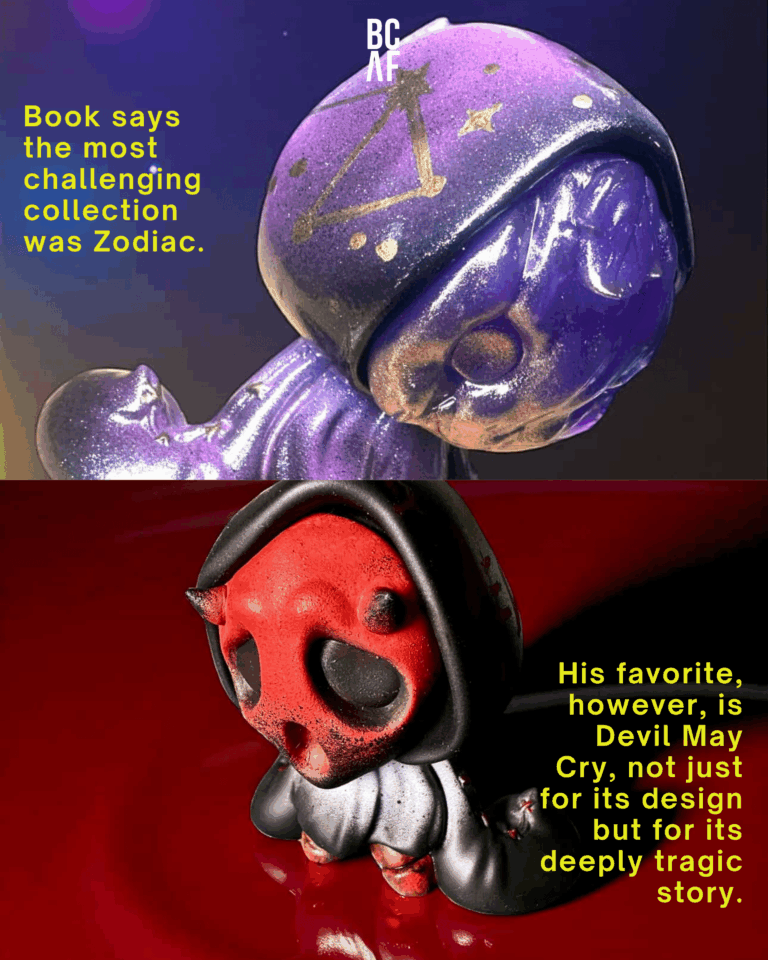
Roboo’s collections
So far, Roboo has five collections: two main collections and three special editions.
Book says the most challenging collection was Zodiac, which required delicate shading and included details representing the constellations of each zodiac sign. His favorite, however, is Devil May Cry, not just for its design but for its deeply tragic story. Devil May Cry not only tells a compelling story but also significantly increased public interest in Roboo, making it a particularly special collection for Book.
“Please take care of little Roboo. This is the second collection, including the Halloween edition with a special pumpkin head—only 13 of each color. They’re still available. Check out our Facebook and Instagram @lucky_boo_studio,” Book added warmly, speaking with happiness and confidence in his artistic journey.
Even though Roboo continues to struggle to find a way to die and may never succeed, for Book—the creator—he has already succeeded in being the artist he aspired to be.